
PRODUCTS

A572 steel bars are lightweight, but have good strength, ductility and workability, making them ideal for structural applications. These characteristics make the A572 relatively simple to shape into different structures, while maintaining the ability to withstand large stresses and loads.
A36 is a low-carbon steel containing trace amounts of manganese, phosphorus, sulfur, silicon and other elements such as copper. A36 has good weldability and high yield strength, and is the most specified structural steel plate by engineers. ASTM A36 is most commonly manufactured as a variety of structural steel parts. This grade is used for welded, bolted or riveted construction of bridges and buildings, as well as for general structural purposes. Due to its lowest yield point, A36 can be used to design lighter-weight structures and equipment, and provide good weldability.
304L is one of the austenitic stainless steels with a chromium content of at least 18%, a nickel content of at least 8%, and a maximum carbon content of 0.03. 304L stainless steel is an ideal choice for various household and commercial applications, with excellent corrosion resistance, ease of manufacturing and excellent formability. Austenitic stainless steels are also considered to be the easiest to weld among high alloy steels and can be welded by all fusion and resistance welding processes.
Type 201 stainless steel is an austenitic chromium-nickel-manganese stainless steel, which is developed to save nickel. Type 201 is a low-cost alternative to traditional Cr-Ni stainless steels such as 301 and 304. The nickel is replaced by added manganese and nitrogen. It cannot be hardened by heat treatment, but can reach high tensile strength by cold working. Type 201 is essentially non-magnetic in the annealed condition and becomes magnetic upon cold working. In many applications, the 201 type may replace the 301 type.
CONTACT US
Email : manager2@xintongmetal.com
Add : Room 4106, Building 1, Excellence Century Center, Shibei District, Qingdao
GET A FREE QUOTE
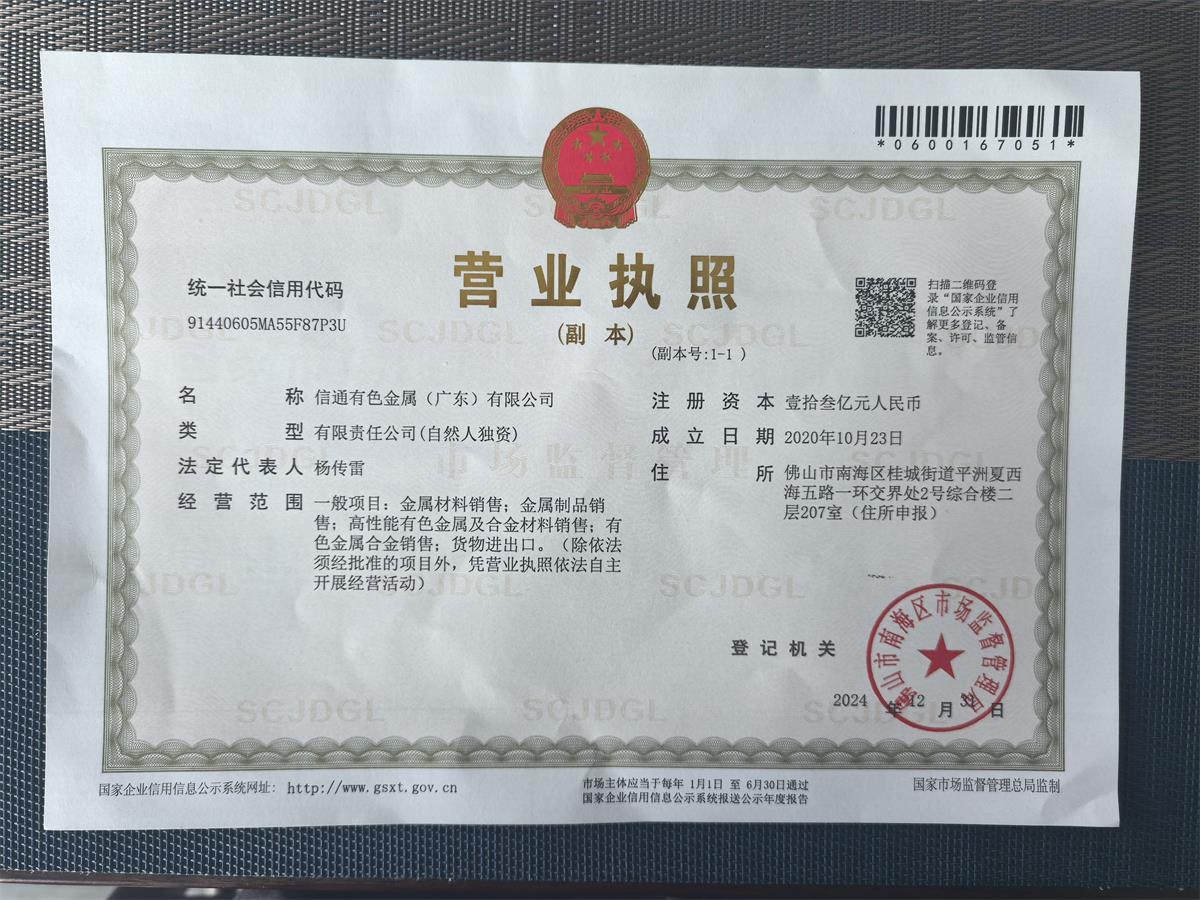
Copyright : Xintong Nonferrous Metals (Guangdong) Co., Ltd. Powered by:CEglobal SEO BUSINESS LICENSE